
How Do Monsoon Winds Form? And Do They Affect Beach Travel?

Monsoon winds are a natural phenomenon most people have heard of, but not everyone knows how they form or how much they affect beach travel. This is especially true along Thailand’s Andaman coast and the Gulf of Thailand, where the seasons differ quite clearly.
This article breaks it down in a simple, easy-to-read way, using information from reliable climate agencies such as the Thai Meteorological Department, the World Meteorological Organization (WMO), and the U.S. NOAA, which all share consistent findings on monsoons in South and Southeast Asia.
How Do Monsoon Winds Form?
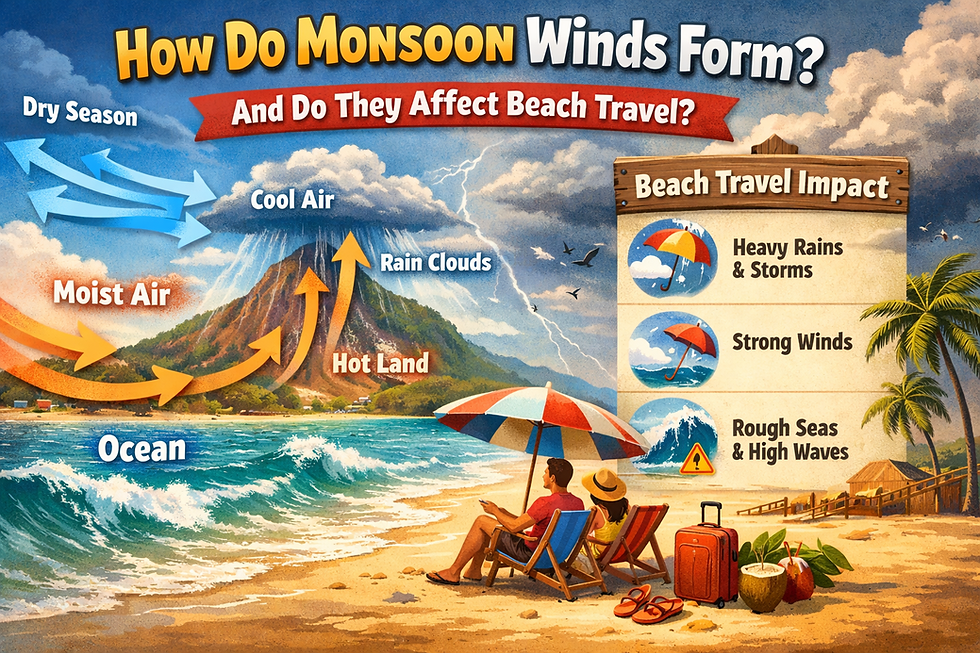
Monsoon winds are essentially seasonal wind shifts caused by temperature differences between land and sea. Land heats up and cools down faster than the ocean, creating large-scale airflow that changes direction depending on the season.
1. Southwest Monsoon (SW Monsoon) — May to October
During summer, the Asian continent heats up rapidly.
Hot air rises and creates a low-pressure area.
Cooler, moisture-rich winds from the Indian Ocean are drawn toward the land.
These winds bring heavy rainfall, especially along the Andaman coast—Phuket, Phang Nga, and Krabi experience this most clearly.
According to the Thai Meteorological Department, waves and winds are typically stronger during this period, with frequent thunderstorms—a normal pattern for the Andaman Sea in the rainy season.
2. Northeast Monsoon (NE Monsoon) — November to February
In winter, the Asian continent cools quickly.
Cold air creates a high-pressure zone, pushing winds down toward the South China Sea and the Gulf of Thailand.
This brings some rain to the Gulf—especially the lower South—while the Andaman side enjoys calm seas and great weather for travel.
NOAA also notes that the NE Monsoon often brings clear skies, light winds, and low waves—ideal for ocean activities.
How Do Monsoon Winds Affect Beach Travel?
Monsoon winds significantly influence travel safety and convenience—from sea conditions and beach safety to access to popular islands.
• Sea Conditions
During the SW Monsoon, waves along the Andaman coast can become much higher. Some days, waves may reach several meters, leading beaches to put up red flags for safety. Both the Thai Meteorological Department and the National Disaster Warning Center confirm this pattern annually.
• Diving and Island Trips
Many islands close during the SW Monsoon—for example, the Similan and Surin Islands—both for safety and environmental recovery.
The NE Monsoon, on the other hand, is the peak season for the Andaman Sea. Clear water, calm waves, and all islands open—perfect for diving and boat excursions.
• Travel and Accommodation
During the SW Monsoon, boat tours or flights may occasionally be canceled. But there’s an upside: many hotels offer great promotions, including beachfront accommodations and pool villas. Staying at a phuket beachfront pool villa during the low season can be especially peaceful, with fewer crowds and a more relaxed atmosphere.
• Overall Travel Experience
If you prefer calm seas, blue skies, and ideal diving conditions: November to April is the best time.
If you enjoy quieter beaches, better prices, and the dramatic sound of strong waves: the monsoon season has its own charm.
Monsoon winds play a major role in shaping Thailand’s beach travel seasons. Understanding how they form—from the temperature differences between land and sea—helps you plan trips that match the experiences you want, whether it’s sailing, diving, or simply relaxing in a beautiful stay like a phuket beachfront pool villa.
Beach trips are always more enjoyable when you can “read the seasons” and prepare according to the natural cycle of the monsoon.
ลมมรสุมเกิดได้ยังไง? มีผลยังไงต่อการเที่ยวทะเลหรือไม่?
ลมมรสุม เป็นปรากฏการณ์ธรรมชาติที่หลายคนคุ้นชื่อเป็นอย่างดี แต่ไม่ใช่ทุกคนจะรู้ว่ามัน “เกิดขึ้นได้อย่างไร” และ “มีผลต่อการท่องเที่ยวทะเลมากน้อยแค่ไหน” โดยเฉพาะฝั่งอันดามันและอ่าวไทยที่มีฤดูกาลต่างกันอย่างชัดเจน บทความนี้จะอธิบายง่าย ๆ แบบอ่านสบาย พร้อมข้อมูลอ้างอิงจากหน่วยงานด้านภูมิอากาศ เช่น กรมอุตุนิยมวิทยาไทย, องค์การอุตุนิยมวิทยาโลก (WMO) และ NOAA ของสหรัฐฯ ซึ่งให้ข้อมูลสอดคล้องกันในปีล่าสุดเกี่ยวกับลมมรสุมในภูมิภาคเอเชียใต้และเอเชียตะวันออกเฉียงใต้
ลมมรสุมเกิดขึ้นได้อย่างไร?
ลมมรสุม (Monsoon) คือการเปลี่ยนทิศทางลมตามฤดูกาลนั่นเอง เกิดจากความแตกต่างของอุณหภูมิระหว่าง “พื้นดิน” และ “พื้นทะเล” เมื่อพื้นดินร้อนหรือเย็นเร็วกว่าทะเล จะทำให้เกิดการไหลเวียนของลมขนาดใหญ่ ส่งผลให้ทิศลมเปลี่ยนไปตามฤดูกาล
1. มรสุมตะวันตกเฉียงใต้ (SW Monsoon) – ช่วงพฤษภาคมถึงตุลาคม
เกิดจากพื้นทวีปเอเชียร้อนขึ้นอย่างรวดเร็วในฤดูร้อน
อากาศร้อนลอยตัวขึ้น ทำให้เกิด “ความกดอากาศต่ำ”
ลมจากมหาสมุทรอินเดียซึ่งเย็นกว่า จึงพัดเข้าสู่แผ่นดินเอเชีย
ลมนำความชื้นจำนวนมาก ทำให้มีฝนตกหนัก โดยเฉพาะชายฝั่งอันดามัน เช่น ภูเก็ต พังงา กระบี่
ข้อมูลจากกรมอุตุนิยมวิทยาไทยระบุว่า ช่วงมรสุมนี้คลื่นลมจะสูงและมีฝนฟ้าคะนองบ่อยครั้ง เป็นเรื่องปกติของฝั่งอันดามันในฤดูฝน
2. มรสุมตะวันออกเฉียงเหนือ (NE Monsoon) – ช่วงพฤศจิกายนถึงกุมภาพันธ์
ช่วงฤดูหนาว ทวีปเอเชียเย็นลงอย่างรวดเร็ว
อากาศเย็นมีความกดอากาศสูงจึงไหลลงสู่ทะเลจีนใต้และอ่าวไทย
ลมนี้ทำให้อากาศทางอ่าวไทยมีฝนบ้าง โดยเฉพาะแถวภาคใต้ตอนล่าง ขณะที่ฝั่งอันดามันกลับอากาศดี ทะเลนิ่ง เหมาะแก่การท่องเที่ยว
องค์การ NOAA ยังชี้ว่าช่วง NE Monsoon มักมีท้องฟ้าโปร่ง ลมอ่อน และคลื่นต่ำ เหมาะกับกิจกรรมทางทะเล
ลมมรสุมส่งผลต่อการท่องเที่ยวทะเลอย่างไร?
ลมมรสุมมีผลมากต่อความปลอดภัยและความสะดวกในการเดินทาง ทั้งเรื่องคลื่นลม สภาพฝั่งทะเล และการเข้าถึงจุดท่องเที่ยวต่าง ๆ
• ผลต่อคลื่นลมทะเล
ช่วง SW Monsoon คลื่นในฝั่งอันดามันจะสูงกว่าปกติ บางวันคลื่นสามารถสูงได้หลายเมตร ทำให้บางหาดมี “ธงแดง” เพื่อความปลอดภัย นักท่องเที่ยวควรหลีกเลี่ยงการลงเล่นน้ำ ข้อมูลนี้ได้รับการยืนยันทั้งจากกรมอุตุนิยมวิทยาและศูนย์เตือนภัยพิบัติแห่งชาติ
• ผลต่อกิจกรรมดำน้ำและทริปทะเล
ฤดูมรสุม SW หลายเกาะจะปิด เช่น หมู่เกาะสิมิลัน หรือสุรินทร์ เพื่อฟื้นฟูธรรมชาติและเพราะคลื่นลมแรง
ฤดู NE เป็นช่วงที่อันดามัน “พีคที่สุด” ทะเลสวย ฟ้าใส เกาะเปิดครบเหมาะกับดำน้ำและล่องเรือ
• ผลต่อการเดินทางและที่พัก
ฤดู SW Monsoon อาจมีการยกเลิกเรือหรือเที่ยวบินบ้าง แต่ข้อดีคือ ที่พักหลายแห่งมีโปรโมชั่นราคาดี รวมถึงพูลวิลล่าริมทะเล เช่น phuket beachfront pool villa ที่ให้บรรยากาศสงบและเป็นส่วนตัวมากขึ้นเพราะนักท่องเที่ยวไม่เยอะ
• ผลต่อประสบการณ์เที่ยว
หากต้องการทะเลนิ่ง ฟ้าเปิด เหมาะกับดำน้ำลึกและดูปะการัง — แนะนำช่วงพฤศจิกายนถึงเมษายน
ถ้าอยากได้บรรยากาศชิลล์ คนไม่เยอะ ค่าที่พักคุ้ม ชอบเสียงคลื่นแรง ๆ — ช่วงมรสุมก็มีเสน่ห์ไปอีกแบบ
ลมมรสุมเป็นธรรมชาติสำคัญที่กำหนดฤดูกาลท่องเที่ยวของทะเลไทยอย่างชัดเจน และรู้ไว้ไม่ใช่แค่เพื่อความสะดวก แต่ยังเป็นเรื่องความปลอดภัยด้วย การทำความเข้าใจว่ามรสุมเกิดขึ้นได้อย่างไร จากความต่างของอุณหภูมิระหว่างแผ่นดินกับทะเล จะช่วยให้คุณวางแผนเลือกช่วงเวลาเที่ยวได้เหมาะกับกิจกรรมที่ต้องการทำมากขึ้น ไม่ว่าจะเป็นการล่องเรือ ดำน้ำ หรือการพักผ่อนแบบสงบ ๆ ในที่พักสวย ๆ เช่น phuket beachfront pool villa
การเที่ยวทะเลจะกลายเป็นประสบการณ์ที่ดีขึ้นเสมอ หากเรารู้จัก “อ่านฤดูกาล” และเตรียมตัวตามธรรมชาติของลมมรสุมอย่างเข้าใจ


Comments